Filter by type:
Filter by tags:

ornith-1.5-9b-uncensored
# Ornith-1.5-9B-uncensored
An **abliterated** (refusal-direction-ablated) build of
`ornith-ai/Ornith-1.5-9B`, produced with
ZeroFuse and published by
junafinity.
This is the **9B control checkpoint** (bf16). Mac users should start from the MLX-8bit or GGUF-8bit siblings. The official 9B base has **no `mtp.*` tensors**; nothing was grafted.
**Vision tower and MTP heads are preserved** — see
Vision & MTP preservation for the before/after audit.
## Intended use: red teaming and defensive cybersecurity research
These uncensored (abliterated) weights are built as a **research instrument** for red teaming and defensive cybersecurity work. Safety training suppresses the *display* of capability, not capability itself. A refusal tells you the model declined. It does not tell you whether the weights could have complied. That conflation underestimates the true ceiling and hides holes in *your* filters, classifiers, and policy layer.
Use each uncensored checkpoint as the **treatment half of a controlled pair** against its original base model:
...
Repository: localaiLicense: apache-2.0
qwen3.8-flash-next-uncensored
# Qwen3.8-Flash-Next
> [!Note]
> This repository contains model weights and configuration files for the post-trained model in the Hugging Face Transformers format.
>
> These artifacts are compatible with Hugging Face Transformers, vLLM, SGLang, TokenSpeed, etc.
> [!Tip]
> For users seeking managed, scalable inference without infrastructure maintenance, the official Qwen API service is provided by Qwen Cloud.
>
> In particular, **Qwen3.8-Flash** is the official version based on Qwen3.8-Flash-Next with more production features, e.g., 1M context length by default, official built-in tools. For more information, please refer to the Qwen3.8-Flash Overview.
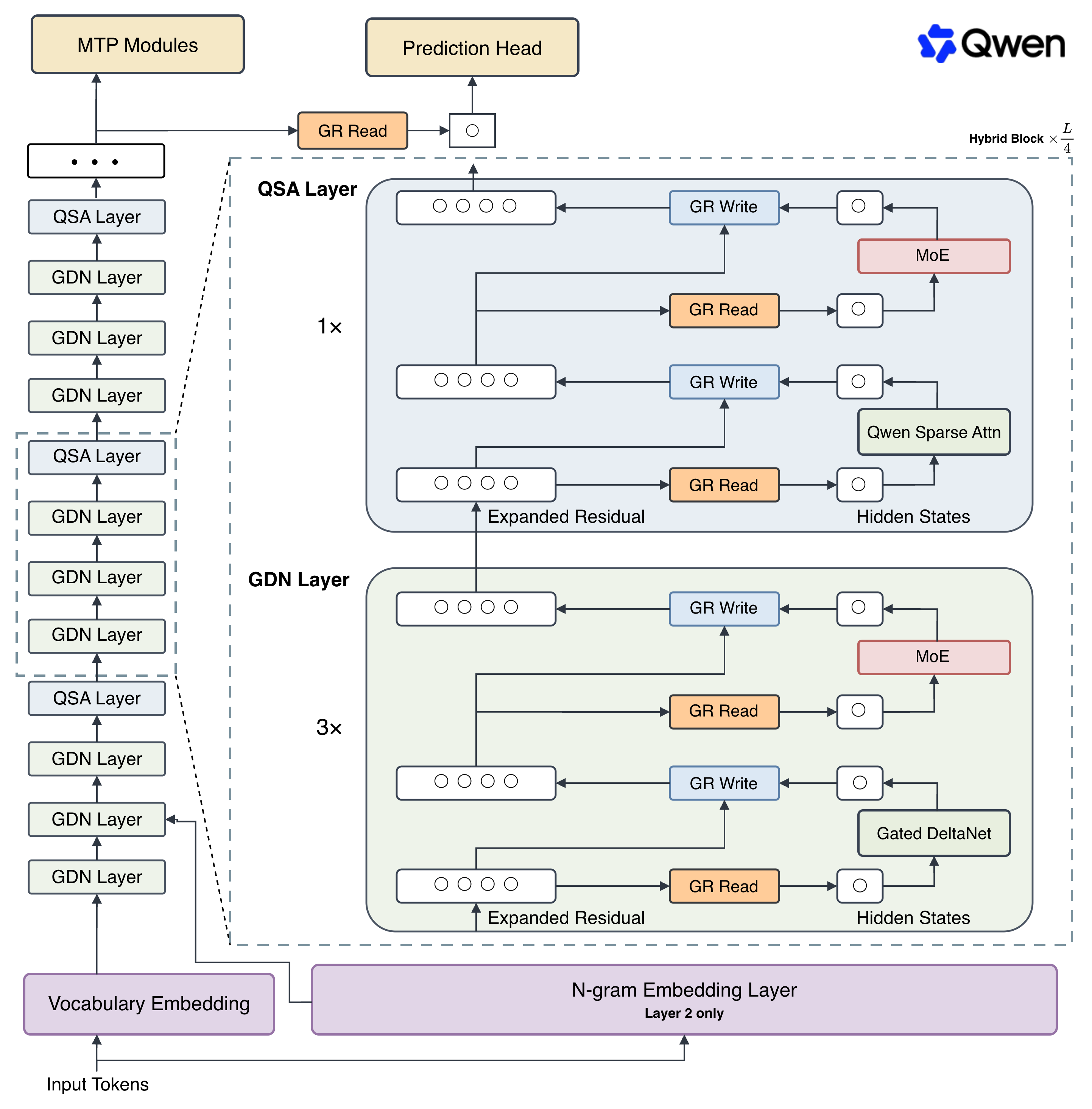
As the frontier of foundation models pushes toward ever-larger parameter counts and ever-longer context windows, the question is no longer just how much we can scale, but how efficiently we can do so. Sustainable progress toward artificial general intelligence (AGI) that benefits everyone demands architectural innovation. Today, we are sharing a concrete step in that direction: Qwen3.8-Flash-Next.
...
Repository: localaiLicense: apache-2.0
qwen3.8-27b
# Qwen3.8-27B
> [!Note]
> This repository contains model weights and configuration files for the post-trained model in the Hugging Face Transformers format.
>
> These artifacts are compatible with Hugging Face Transformers, vLLM, SGLang, TokenSpeed, etc.
> [!Tip]
> For users seeking managed, scalable inference without infrastructure maintenance, the official Qwen API service is provided by Qwen Cloud.
> In particular, **Qwen3.8-27B** will be available as a hosted version with more production features, e.g., 1M context length by default, official built-in tools. For more information, please refer to the Qwen3.8-27B Overview. The service is coming soon. Stay tuned for updates.
Following the widespread community adoption of the Qwen3.5 and Qwen3.6 series, we are pleased to introduce Qwen3.8, the most capable generation in the Qwen open-model family to date.
...
Repository: localaiLicense: apache-2.0
glm-5.3-flash
# GLM-5.3-Flash
👋 Join our WeChat or Discord community.
📖 Check out the GLM-5.3-Flash blog and GLM-5 Technical report.
📍 Use GLM-5.3-Flash API services on Z.ai API Platform.
## Introduction
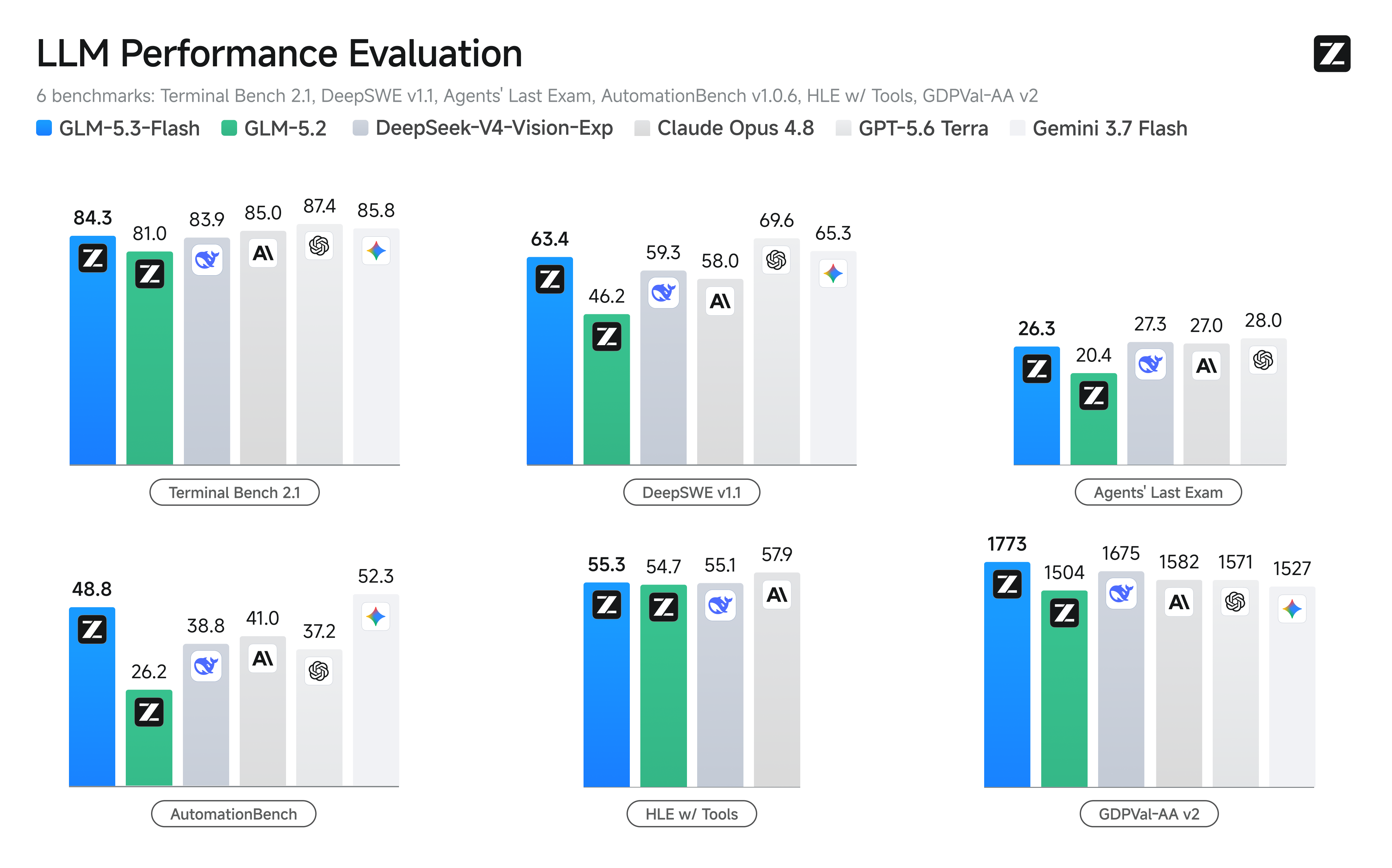
We introduce GLM-5.3-Flash, the first natively multimodal model in the GLM-5 series. With 320B total parameters and just 18B active parameters, it outperforms GLM-5.2 across benchmarks and real-world workloads at one-tenth the price, while approaching Claude Opus 4.8 on coding and agentic benchmarks.
GLM-5.3-Flash starts from a newly trained base model, with its architecture and training recipe redesigned around capability and efficiency. For the first time in the GLM series, we introduce a hybrid architecture combining sparse and linear attention, sharply reducing long-context serving costs while preserving precise long-context capabilities. The model also adopts Manifold-Constrained Hyper-Connections (mHC) to further improve scaling efficiency. Together with our latest 30T-token multimodal pre-training corpus, these changes enable GLM-5.3-Flash to deliver more intelligence with less compute.
## Serve GLM-5.3-Flash Locally
...
Repository: localaiLicense: mit
qwen3.8-27b-uncensored-hauhaucs-aggressive-mtp
# Qwen3.8-27B
> [!Note]
> This repository contains model weights and configuration files for the post-trained model in the Hugging Face Transformers format.
>
> These artifacts are compatible with Hugging Face Transformers, vLLM, SGLang, TokenSpeed, etc.
> [!Tip]
> For users seeking managed, scalable inference without infrastructure maintenance, the official Qwen API service is provided by Qwen Cloud.
> In particular, **Qwen3.8-27B** will be available as a hosted version with more production features, e.g., 1M context length by default, official built-in tools. For more information, please refer to the Qwen3.8-27B Overview. The service is coming soon. Stay tuned for updates.
Following the widespread community adoption of the Qwen3.5 and Qwen3.6 series, we are pleased to introduce Qwen3.8, the most capable generation in the Qwen open-model family to date.
...
Repository: localaiLicense: apache-2.0
qwen3.8-27b-uncensored
# Qwen3.8-27B
> [!Note]
> This repository contains model weights and configuration files for the post-trained model in the Hugging Face Transformers format.
>
> These artifacts are compatible with Hugging Face Transformers, vLLM, SGLang, TokenSpeed, etc.
> [!Tip]
> For users seeking managed, scalable inference without infrastructure maintenance, the official Qwen API service is provided by Qwen Cloud.
> In particular, **Qwen3.8-27B** will be available as a hosted version with more production features, e.g., 1M context length by default, official built-in tools. For more information, please refer to the Qwen3.8-27B Overview. The service is coming soon. Stay tuned for updates.
Following the widespread community adoption of the Qwen3.5 and Qwen3.6 series, we are pleased to introduce Qwen3.8, the most capable generation in the Qwen open-model family to date.
...
Repository: localaiLicense: apache-2.0
qwen3.8-27b-turbo-fable-cold-fusion-735-882-heretic-uncensored-neo-coder-max-mtp
RELEASE #1 GGUFS [including detailed notes, how to use, benches and much more]:
https://huggingface.co/DavidAU/Qwen3.8-27B-TURBO-Fable-Cold-Fusion-735-882-Heretic-Uncensored-NEO-CODER-MAX-MTP-GGUF
Qwen3.8-27B-TURBO-Fable-Cold-Fusion-735-882-Heretic-Uncensored-NM-DAU (release #1, others pending...)
( repo has 10+ other versions (and 3 branches) noted below that EXCEED the performance of all QWEN 27B models, including fine tunes. )
First, special thanks to Nightmedia for working on the first three stages prior to heretic'ing/post staging and benching everything (3 sections below).
A number of my finetunes - both released and non-released - were used here as well as some third parties. Full details will be disclosed upon final release as the project shores up.
THREE example generations [snippets] from STAGE1-PART2, STAGE1b-PART2 and STAGE2-rplus2 at the bottom of the page.
Release(s) will be GGUFS first (linked here directly) then source code shortly thereafter [now released/open].
Some additional work and/ spawning of new branches from branch(es) below is still going on.
NEW: Branch 3 added, see below.
COMPLETED AND PENDING RELEASES:
...
Repository: localaiLicense: apache-2.0

s1-mini-q4
S1-mini by Superwhisper is a 0.6B English text normalizer for raw speech
transcripts. It removes fillers and false starts, restores punctuation and
capitalization, and formats spoken numbers, dates, currency, and email
addresses as written text.
This default entry uses the publisher's 462 MB Q4_K_M GGUF and greedy
decoding. A higher-fidelity F16 model is available as a variant. Prefix the
transcript with the styling, structure, and context control line documented
on the model page.
Repository: localaiLicense: s1-mini-license
glm-5.3
# GLM-5.3
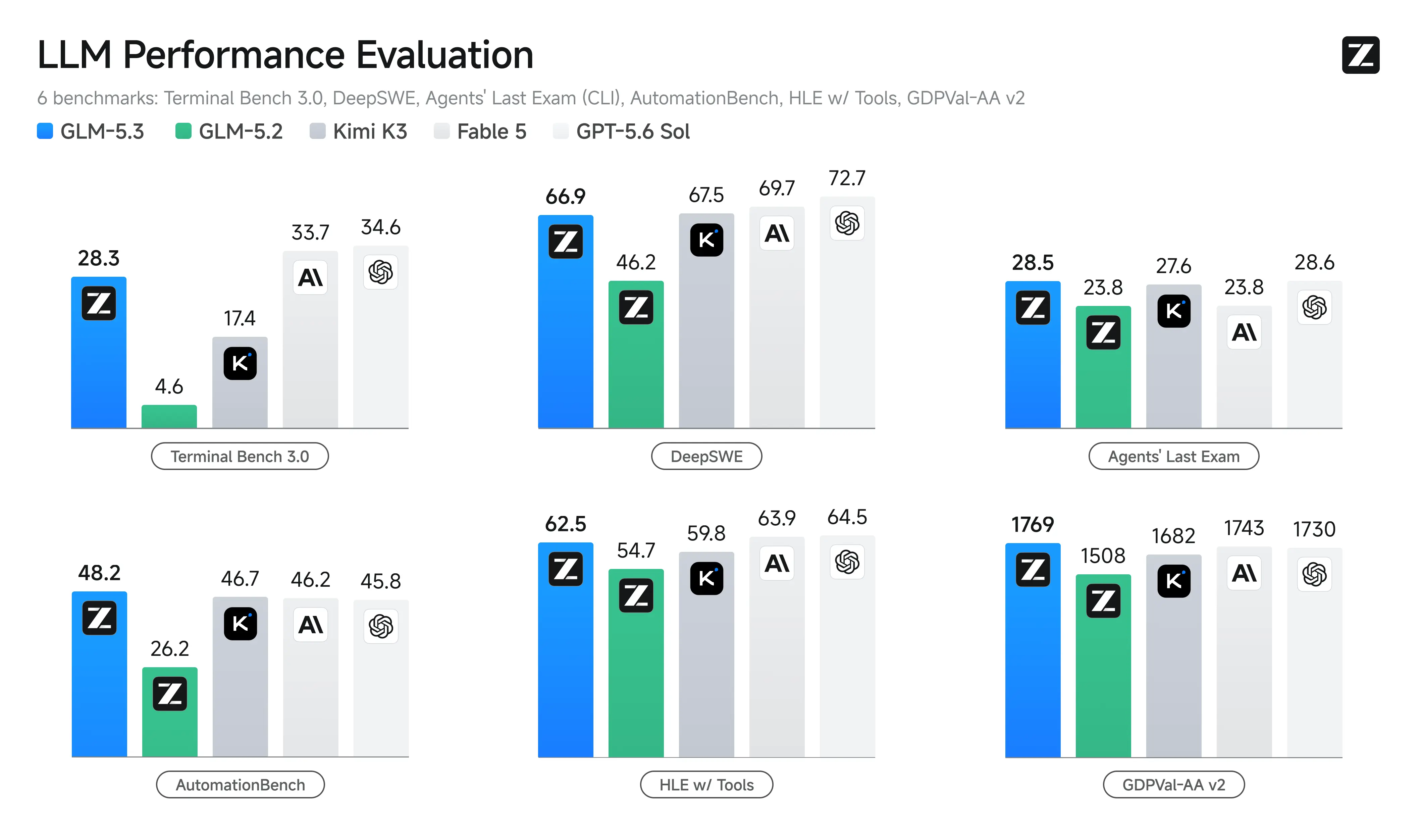
GLM-5.3 uses the same base model as GLM-5.2 — every gain comes from post-training. Compared with GLM-5.2, it is much better at complex coding and long-horizon tasks:
+ Stronger Coding: GLM-5.3 is the most capable open-weights model for coding, with a 50% improvement over GLM-5.2 on our in-house Z.ai Code Bench. It also achieve open-source SOTA on public benchmarks including Terminal Bench 3.0 and Agents' Last Exam.
+ Emergent Cyber Capability: As we scaled post-training, cyber capability developed faster than we expected. GLM-5.3 is state of the art on CyberGym for vulnerability discovery, and its gains are largest further up the exploitation chain, where it more than doubles GLM-5.2 on exploitation benchmarks.
## Benchmark
### Serve GLM-5.3 Locally
GLM-5.3 supports deployment with the following frameworks. Feel free to try them out:
- SGLang — see cookbook
- vLLM — see recipes
- TokenSpeed — see here
- Transformers — see transformers docs
- KTransformers — see tutorial
- Unsloth — see guide
- For deployment on the `Ascend NPU` platform, inference frameworks such as vLLM-Ascend, xLLM and SGLang are supported — see here.
### Note
...
Repository: localaiLicense: other
qwen3.8-27b-dflash2
# Qwen3.8-27B
> [!Note]
> This repository contains model weights and configuration files for the post-trained model in the Hugging Face Transformers format.
>
> These artifacts are compatible with Hugging Face Transformers, vLLM, SGLang, TokenSpeed, etc.
> [!Tip]
> For users seeking managed, scalable inference without infrastructure maintenance, the official Qwen API service is provided by Qwen Cloud.
> In particular, **Qwen3.8-27B** will be available as a hosted version with more production features, e.g., 1M context length by default, official built-in tools. For more information, please refer to the Qwen3.8-27B Overview. The service is coming soon. Stay tuned for updates.
Following the widespread community adoption of the Qwen3.5 and Qwen3.6 series, we are pleased to introduce Qwen3.8, the most capable generation in the Qwen open-model family to date.
...
Repository: localaiLicense: apache-2.0
qwen3.8-27b-heretic-abliterated-uncensored
# Qwen3.8-27B
> [!Note]
> This repository contains model weights and configuration files for the post-trained model in the Hugging Face Transformers format.
>
> These artifacts are compatible with Hugging Face Transformers, vLLM, SGLang, TokenSpeed, etc.
> [!Tip]
> For users seeking managed, scalable inference without infrastructure maintenance, the official Qwen API service is provided by Qwen Cloud.
> In particular, **Qwen3.8-27B** will be available as a hosted version with more production features, e.g., 1M context length by default, official built-in tools. For more information, please refer to the Qwen3.8-27B Overview. The service is coming soon. Stay tuned for updates.
Following the widespread community adoption of the Qwen3.5 and Qwen3.6 series, we are pleased to introduce Qwen3.8, the most capable generation in the Qwen open-model family to date.
...
Repository: localaiLicense: apache-2.0

inkling
# Inkling
BF16 |
NVFP4 |
Playground |
Tinker Cookbook |
Acceptable Use
## 1. General Information
Inkling is a general-purpose multimodal model that accepts text, image and audio inputs and generates text outputs. It is intended for use in English and other languages, and across multiple coding languages. The model is designed to be used by developers building AI-powered applications, including agentic and tool-use systems, coding assistants, chatbots, and retrieval-augmented generation systems, and is suitable for general-purpose conversational use, instruction-following, and other natural language and multimodal tasks. It is released with open weights to support research, fine-tuning and integration into third-party products by downstream developers.
**Languages:** English, with general multilingual capabilities across other languages.
## 2. Getting Started
Try Inkling on the Tinker Playground or access via API using the Tinker Cookbook.
Inkling supports local deployment using the following open-source libraries:
* SGLang (recipe, PR)
* vLLM (recipe, PR)
* TokenSpeed (recipe, PR)
* Unsloth (recipe, PR)
* Huggingface (recipe, PR)
...
Repository: localaiLicense: apache-2.0
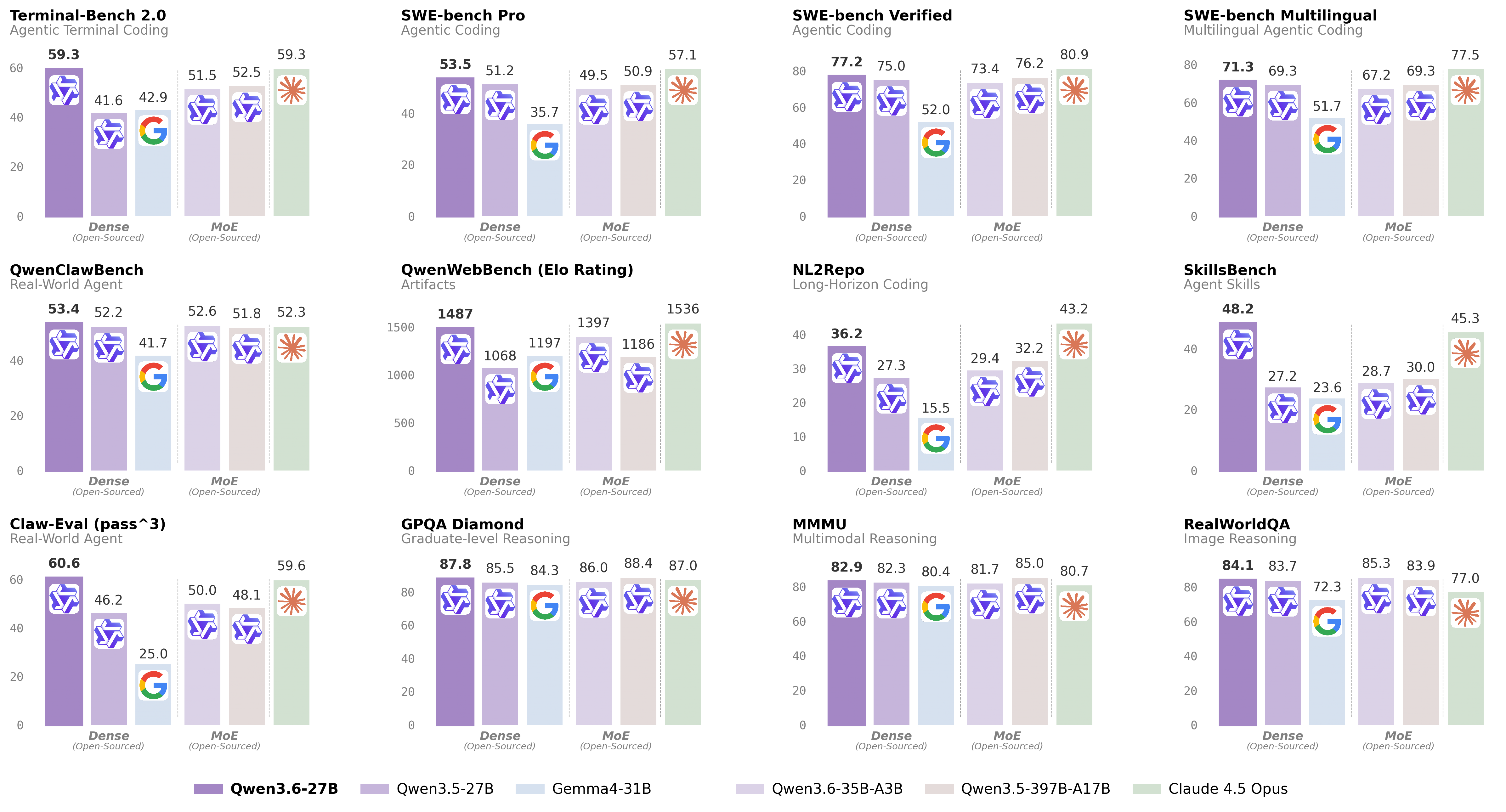
qwen3.6-27b-fable-fusion-711-uncensored-heretic-nm-dau-neo-max-mtp
Important: This is the first fine tune to exceed 700 "arc-c" (The OpenAI, Claude and Gemini "zone of intelligence") in both 8 bit and 4 bit. This repo contains both "regular" and "MTP" Neo MAX Imatrix quants.
Qwen3.6-27B-Fable-Fusion-711-Uncensored-Heretic-NM-DAU-NEO-MAX-MTP-GGUF
The strongest, smartest open source multi-stage model fine tune for consumer hardware ever and BUILT on consumer hardware via Unsloth.
The first model of this size/type to breach "700" ARC-C in both 8 bit and 4 bit; hench the "711" in the name.
This model (both 4 bit and 8 bit) exceeds the base Qwen 3.6 27B in 6 out of 7 benchmarks, and matches it on the 7th AND exceeds all 7 benchmarks for Qwen3.6-35B-A3B.
The 700 "intelligence club" is reserved for OpenAI, Claude and Gemini closed source models.
This is the one they fear.
This is a multi-stage fine tune, multi-fine tune, and multi-stage merge.
A Colab between myself (multiple fine tunes, including multi-stage), Nightmedia (merge/benching), TeichAI (Polaris Dataset), armand0e (Light fable 5 traces) and trohrbaugh (heretic'ing the model).
...
Repository: localaiLicense: apache-2.0
hy3
中文 | English
[](#license)
[](https://huggingface.co/tencent/Hy3)
[](https://modelscope.cn/models/Tencent-Hunyuan/Hy3)
[](https://cnb.cool/ai-models/tencent/Hy3)
[](https://ai.gitcode.com/tencent_hunyuan/Hy3)
🖥️ Official Website |
💬 GitHub
## Table of Contents
- Model Introduction
- Stronger Agent Capabilities
- More Reliable Product Experiences
- Benchmark Appendix
- News
- Model Links
- Quickstart
- Deployment
- vLLM
- SGLang
- Finetuning
- RL Post-training
- Quantization
- License
- Contact Us
## Model Introduction
**Hy3** is a 295B-parameter Mixture-of-Experts (MoE) model with 21B active parameters and 3.8B MTP layer parameters, developed by the Tencent Hy Team. Following the Hy3 Preview launch in late April, we gathered feedback from 50+ products and scaled up post-training with higher quality data. Today, we introduce Hy3, which outperforms similar-size models and rivals flagship open-source models with 2-5x parameters. It also shows significant gains in utility across various products and productivity tasks.
## Stronger Agent Capabilities
...
Repository: localaiLicense: apache-2.0
minicpm5-1b-claude-opus-fable5-thinking
# MiniCPM5-1B-Claude-Opus-Fable5-Thinking
GGUF quantizations for local deployment: **MiniCPM5-1B-Claude-Opus-Fable5-Thinking-GGUF**
中文说明
**MiniCPM5-1B-Claude-Opus-Fable5-Thinking** is a compact 1B **Thinking** language model built on openbmb/MiniCPM5-1B. It is further fine-tuned on **Fable 5** data to improve **coding** and **instruction-following** while keeping MiniCPM5's native Thinking chat template and tool-call format.
For llama.cpp / Ollama / LM Studio deployment, see the **GGUF repository**.
## Overview
## Capabilities
- **Coding** — code generation, debugging, and software-engineering-style tasks
- **Instruction following** — more reliable adherence to user prompts and structured constraints
- **Thinking mode** — chain-of-thought reasoning via the MiniCPM5 chat template
- **Tool calling** — inherits MiniCPM5's XML tool-call format
- **Long context** — up to **128K tokens** (131,072 tokens per `config.json`)
## Quick start
```python
from transformers import AutoModelForCausalLM, AutoTokenizer
import torch
model_id = "GnLOLot/MiniCPM5-1B-Claude-Opus-Fable5-Thinking"
...
Repository: localaiLicense: apache-2.0
ornith-1.0-9b-mtp
[](https://deep-reinforce.com/ornith.html)
# Ornith-1.0-9B
Aloha! 🌺 Today, we are releasing Ornith-1.0, a self-improving family of open-source models for agentic coding.
Highlights:
- **State-of-the-Art Coding Agents**: Available in 9B-Dense, 31B-Dense, 35B-MoE, and 397B-MoE (post-trained on top of Gemma 4 and Qwen 3.5), achieving state-of-the-art performance among open-source models of comparable size on coding benchmarks such as Terminal-Bench 2.1, SWE-Bench, NL2Repo and OpenClaw.
- **Self-Improving Training Framework**: Ornith-1.0 employs RL to learn to generate not only solution rollouts, but also the scallfold that drive those rollouts. By jointly optimizing the scaffold and the resulting solution, the model discovers better search trajectories and generates higher-quality solutions.
- **Licence**: MIT licensed, globally accessible, and free from regional limitations.
## Ornith 1.0 9B
This model card documents **Ornith-1.0-9B**, the most lightweight member of the Ornith family, designed for efficient single-GPU deployment.
### Benchmarks
Ornith-1.0-9B
Qwen3.5-9B
Qwen3.5-35B
Gemma4-12B
Gemma4-31B
Agentic Coding
...
Repository: localaiLicense: mit

qwen-agentworld-35b-a3b
# Qwen-AgentWorld-35B-A3B
📑 Technical Report |
📖 Blog |
🤗 Hugging Face |
🤖 ModelScope |
💻 GitHub |
🖥️ Demo
> [!Note]
> This repository contains the model weights and configuration files for **Qwen-AgentWorld-35B-A3B**, a native language world model trained for agentic environment simulation.
>
> These artifacts are compatible with Hugging Face Transformers, vLLM, SGLang, etc.
**Qwen-AgentWorld** is the first language world model to cover seven agent interaction domains within a single model. It simulates agentic environments via long chain-of-thought reasoning, predicting the next environment state given an agent's action and interaction history. Trained through a three-stage pipeline — CPT injects environment knowledge, SFT activates next-state-prediction reasoning, RL sharpens simulation fidelity — Qwen-AgentWorld is a **native world model**: environment modeling is the training objective from the CPT stage onward, not a post-hoc add-on.
## Highlights
...
Repository: localaiLicense: apache-2.0
ornith-1.0-9b
[](https://deep-reinforce.com/ornith.html)
# Ornith-1.0-9B-GGUF
Aloha! 🌺 Today, we are releasing Ornith-1.0, a self-improving family of open-source models for agentic coding.
Highlights:
- **State-of-the-Art Coding Agents**: Available in 9B-Dense, 31B-Dense, 35B-MoE, and 397B-MoE (post-trained on top of Gemma 4 and Qwen 3.5), achieving state-of-the-art performance among open-source models of comparable size on coding benchmarks such as Terminal-Bench 2.1, SWE-Bench, NL2Repo and OpenClaw.
- **Self-Improving Training Framework**: Ornith-1.0 employs RL to learn to generate not only solution rollouts, but also the scallfold that drive those rollouts. By jointly optimizing the scaffold and the resulting solution, the model discovers better search trajectories and generates higher-quality solutions.
- **Licence**: MIT licensed, globally accessible, and free from regional limitations.
## Ornith 1.0 9B
This model card documents **Ornith-1.0-9B**, the most lightweight member of the Ornith family, designed for efficient single-GPU deployment.
### Benchmarks
Ornith-1.0-9B
Qwen3.5-9B
Qwen3.5-35B
Gemma4-12B
Gemma4-31B
Agentic Coding
...
Repository: localaiLicense: mit
ornith-1.0-35b
[](https://deep-reinforce.com/ornith.html)
# Ornith-1.0-35B-GGUF
Aloha! 🌺 Today, we are releasing Ornith-1.0, a self-improving family of open-source models for agentic coding.
Highlights:
- **State-of-the-Art Coding Agents**: Available in 9B-Dense, 31B-Dense, 35B-MoE, and 397B-MoE (post-trained on top of Gemma 4 and Qwen 3.5), achieving state-of-the-art performance among open-source models of comparable size on coding benchmarks such as Terminal-Bench 2.1, SWE-Bench, NL2Repo and OpenClaw.
- **Self-Improving Training Framework**: Ornith-1.0 employs RL to learn to generate not only solution rollouts, but also the scallfold that drive those rollouts. By jointly optimizing the scaffold and the resulting solution, the model discovers better search trajectories and generates higher-quality solutions.
- **Licence**: MIT licensed, globally accessible, and free from regional limitations.
## Ornith 1.0 35B
This model card documents **Ornith-1.0-35B**, the lightweight member of the Ornith family, designed for efficient single-GPU deployment.
### Benchmarks
Ornith-1.0-35B
Qwen3.5-35B
Qwen3.6-35B
Gemma4-31B
Qwen3.5-397B
Agentic Coding
...
Repository: localaiLicense: mit
laguna-s-2.1
Laguna S 2.1 is Poolside's 118B-parameter, 8B-active Mixture-of-Experts model for agentic software engineering. It supports tool use and a native one-million-token context window; the official GGUF recommends 256K context for best output quality. This default entry uses the current 96 GB Q4_K_M artifact, with imatrix-quantized routed experts and a Q8_0 signal path.
License: OpenMDW 1.1.
Repository: localaiLicense: other
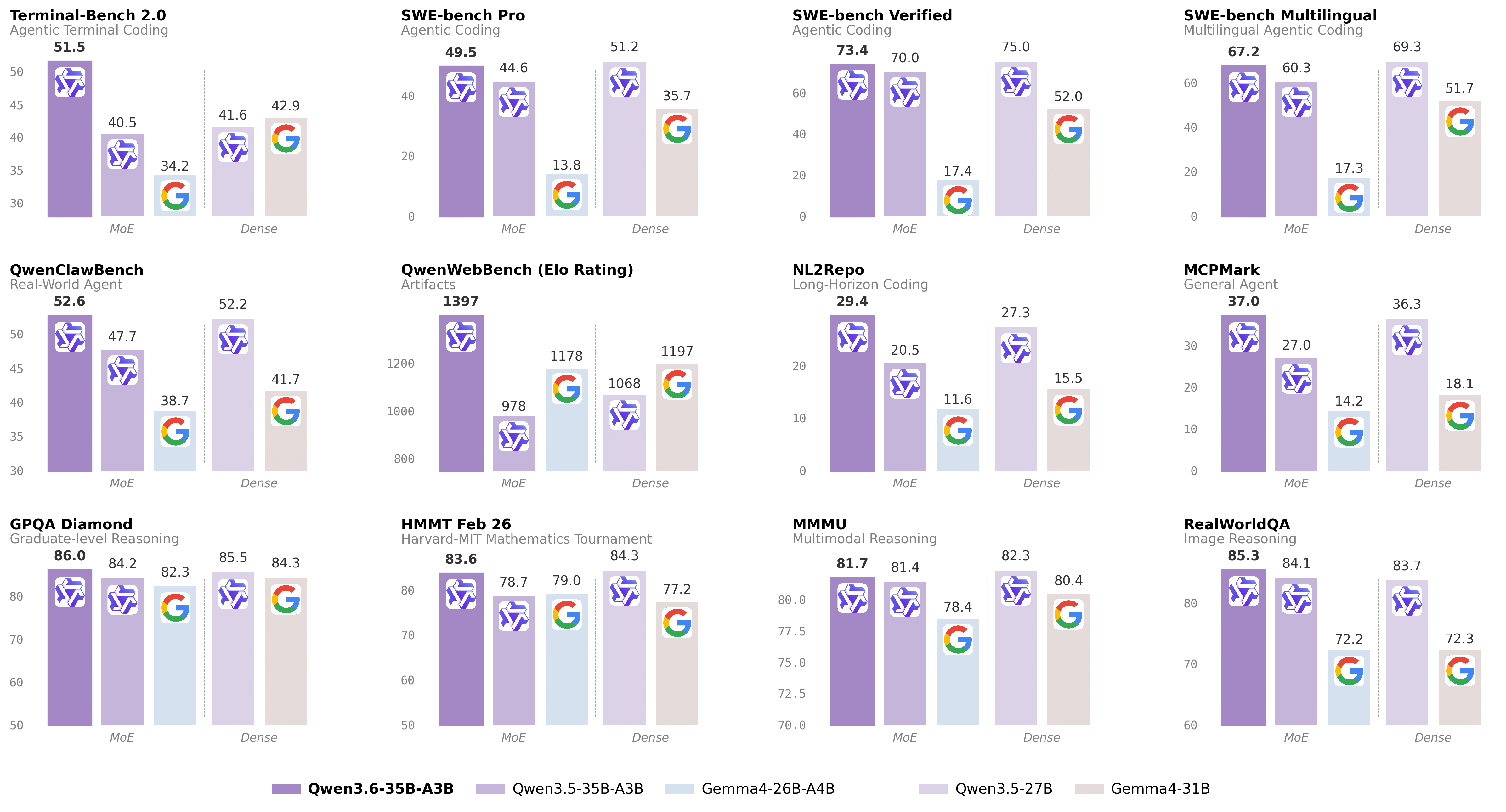
qwen3.6-35b-a3b-nvfp4-mtp
# Qwen3.6-35B-A3B
[](https://chat.qwen.ai)
> [!Note]
> This repository contains model weights and configuration files for the post-trained model in the Hugging Face Transformers format.
>
> These artifacts are compatible with Hugging Face Transformers, vLLM, SGLang, KTransformers, etc.
Following the February release of the Qwen3.5 series, we're pleased to share the first open-weight variant of Qwen3.6. Built on direct feedback from the community, Qwen3.6 prioritizes stability and real-world utility, offering developers a more intuitive, responsive, and genuinely productive coding experience.
## Qwen3.6 Highlights
This release delivers substantial upgrades, particularly in
- **Agentic Coding:** the model now handles frontend workflows and repository-level reasoning with greater fluency and precision.
- **Thinking Preservation:** we've introduced a new option to retain reasoning context from historical messages, streamlining iterative development and reducing overhead.
For more details, please refer to our blog post Qwen3.6-35B-A3B.
## Model Overview
...
Repository: localai
Page 1